Singing to babies is one of the oldest things humans do. New research is starting to explain exactly why it works so well, and the answer goes deeper than most parents expect.
It starts before birth
Your baby’s hearing is functional from around 20 weeks in the womb. By the time they are born, they have already been listening for months. A study published in The Lancet as far back as 1988 found that babies whose mothers had watched a particular soap opera during pregnancy showed a calm, attentive response to the theme tune after birth. They remembered it.
This means singing to babies during pregnancy is not just a nice thing to do. It is the earliest possible introduction to your voice, your rhythm, and your way of communicating.
What the latest research shows
A study published in Nature in 2026 found that singing activates the same specialised neural networks in newborn brains as speech, and that both are significantly more powerful than music alone. The researchers described these as early traces of networks that will later support language acquisition. Song regularises rhythm and pitch in a way that helps the developing brain organise sound into meaning.
This builds on earlier work from NICU settings, where singing by parents (and in some studies, by trained music therapists) has been shown to support weight gain, reduce stress responses, and strengthen the parent-baby bond in the most vulnerable babies.
Why your voice matters more than a playlist
Singing to babies is not the same as playing music to them, though both have value. What your voice does that a recording cannot is respond. It slows down when your baby stills. It rises when they smile. It stops when you make eye contact and then starts again.
This responsiveness is what researchers call communicative musicality: the musical quality in all human communication, the rise and fall of pitch, the rhythm of turn-taking, the timing of pause and response. Motherese, the instinctive higher-pitched, slower, sing-song way adults talk to babies, is the most natural expression of this. You do it without thinking, and your baby is wired to respond to it.
Singing to babies at home: activities to try
You do not need to be musical to do any of this well. Your baby is not judging the quality of your voice. They are tuning into you.
Sing through your day. Nappy changes, bath time, getting dressed: narrating these moments as a song (even a made-up one) helps your baby start to predict patterns and routines. Predictability is calming and cognitively important.
Copy games. Make a sound and wait. When your baby makes a sound back, copy them. This back-and-forth teaches them that communication is two-way long before they have words.
Rock and sing together. Combining gentle movement with singing activates the vestibular system and the auditory system at the same time. Two-for-one development, and your baby will love it.
Treasure basket with instruments. Let older babies explore simple instruments: a wooden spoon, a shaker, a small drum. Listening to the sounds they make and responding to them builds early musical understanding and fine motor skills together.
Quiet moments matter too. Humming softly while your baby rests, or singing something slow before sleep, is not just calming. It continues the auditory input their developing brain is processing even when they look still.
What we do at Baby College
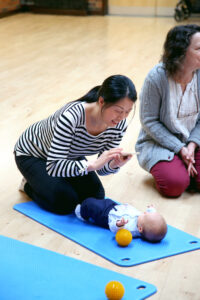
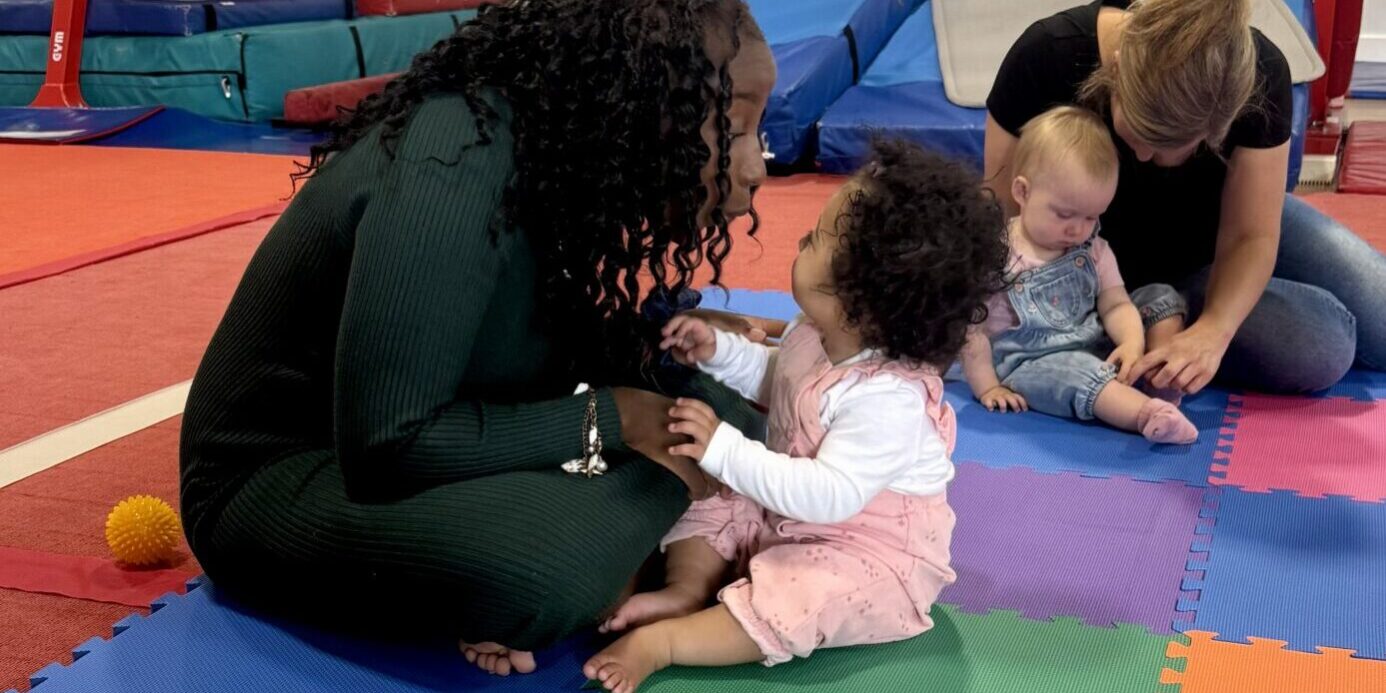
Music runs through every Baby College class. Songs are chosen to match the developmental stage of each tier, from the gentle repetitive songs of the Infants programme to the more interactive, movement-based songs for Toddlers and Juniors. The songs stay consistent week on week within a term because repetition is how babies learn, and because hearing a familiar song is one of the first moments a baby shows you they remember something.
Parents regularly tell us that class songs become the ones they use at home for nappy changes and bath time and bedtime. That is the point.
Find your nearest class at babycollege.co.uk.
#babycollegefamily