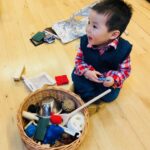
Exploring the Magic of Treasure Baskets and Heuristic Play: How Babies and Toddlers Learn from Everyday Objects
Babies and toddlers are natural explorers, constantly learning about their world through playful interactions with objects. While purpose-made toys certainly have their place, some of the most effective learning comes from everyday household items and unique textures. You may have noticed how babies tend to reach for items like keys or remote controls with more excitement than any plastic baby toy. This fascination highlights a core concept in early childhood development: heuristic play.
Heuristic play, derived from the Greek word meaning “to discover,” is a child-led form of learning where young children investigate, experiment, and make sense of the objects around them. By using “treasure baskets” filled with a variety of sensory-rich objects, you can support your baby’s natural curiosity and help them build foundational learning skills. Let’s explore the stages of heuristic play, from treasure baskets for infants to creative object play for young children, and see how you can easily encourage this valuable type of learning at home.
Stage 1: “What Is This Object Like?” (Infants ~5-10 Months)
For babies in this stage, learning is all about sensory exploration. Babies use their senses—touch, taste, smell, sight, and hearing—to investigate objects. They don’t need to understand what an object does just yet; they are simply interested in its textures, shapes, and sounds. This is where a treasure basket can play an important role.
Creating a Treasure Basket for Stage 1: A treasure basket is simply a collection of safe, household items with diverse textures and shapes that can stimulate a baby’s senses. Think of things like wooden spoons, metal cups, soft fabrics, or natural objects like pinecones (ensuring they’re large enough not to be swallowed). Babies in this stage might hold, mouth, and inspect these objects, learning about the world around them.
Supervise your baby closely as they explore the basket. The items you choose should be safe, non-toxic, and large enough not to be a choking hazard. Simple items can provide hours of fascination and help develop hand-eye coordination and sensory awareness.
Stage 2: “What Can I Do with It?” (Toddlers ~10-20 Months)
As babies grow into toddlers, they become more mobile and interested in the actions they can perform with objects. They might begin stacking, shaking, banging, or combining items to see what happens. In this stage, toddlers are discovering what objects can do—how they move, sound, and interact with other objects.
Expanding on Heuristic Play in Stage 2: Encourage this curiosity by adding items like stacking cups, scarves, or metal lids that make sounds when hit together. You could even create a “music basket” filled with items like a wooden spoon and a small saucepan that your toddler can use to make different sounds.
During this phase, toddlers are not only developing physical skills, such as hand strength and coordination, but also building cognitive abilities as they experiment with cause and effect. Through heuristic play, they start learning basic problem-solving by figuring out what works and what doesn’t, like balancing items or filling and emptying containers.
Stage 3: “What Can This Object Become?” (Young Children ~20 Months Onwards)
By this stage, children’s imaginations are in full bloom. They’ve had many sensory experiences with objects and now want to assign roles and purposes to them. A box may become a boat, a spoon may turn into a microphone, and so on. This type of imaginative play is a big step in their cognitive and language development, as they begin to use objects to represent other things and build simple storylines.
Supporting Imaginative Heuristic Play in Stage 3: Encourage your child’s creativity by introducing versatile objects like empty containers, cardboard tubes, and scarves. Give them the freedom to decide how they’ll use these items in their play, and you’ll be surprised at the innovative ways they transform them. This stage builds symbolic thinking, creativity, and even early language skills as they start to assign names and roles to objects.
Why Heuristic Play Matters
Heuristic play is about more than just keeping a child busy. It allows children to explore freely and learn at their own pace, which promotes confidence, problem-solving, and creativity. Treasure baskets are an accessible way to incorporate heuristic play into your child’s daily life and offer valuable brain-stimulating experiences.
So next time you notice your baby reaching for a household item, consider giving them a treasure basket to explore—and watch their natural curiosity lead the way to learning! To find out more, join our #BabyCollegeFamily for parent/carer and baby classes where we delve into the wonders of early childhood development. Head over to www.babycollege.co.uk to learn more!
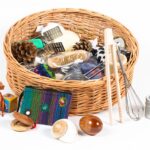
What shall I put in my Treasure Basket
Below are a few ideas for items that can be included in a treasure basket for the under ones. At this time of year, you could also theme your basket to include some safe autumnal objects (pine cones, large leaves, satsumas).
Every time you go somewhere new you can collect objects to go into the treasure basket (shells from a trip to the beach or pine cones from a visit to the park), so that as the basket grows it reinforces learning experiences and memory skills development and the number of interactions between the objects multiplies too.
- Wooden objects: small wooden spoons, clothes pegs, egg cups, door wedges, coasters, honey drizzler etc.
- Fabric and leather: pieces of silk cloth, flannels, coloured ribbon, leather key rings, small wallets, bean bags etc
- Brushes: Scrubbing brush, pastry brush, small hair brush, nail brush, makeup brush, paint brush, shaving brush, wooden toothbrush.
- Glass and metal: tea strainers, bath plugs, small strong glass bottles (essence bottles), mirrors
- Natural objects: oranges, lemons, limes, fur, large pebbles, pine cones, shells, natural sponges, objects made from bone
Always make sure broken objects are removed and that you remain nearby to supervise but without interfering with the joy of their independent discoveries!
A personalised treasure basket, collected with love, makes a perfect first Christmas present by the way.