A study published in Child Development in 2026 found that by 18 months, toddlers engage more deeply with adults whose emotional reactions have been consistent. They were already tracking who to trust.
It turns out that social intelligence does not suddenly appear. It builds, quietly and steadily, from the very first days of life.
It starts with you
In the first months, you are your baby’s entire social world. Face-to-face contact is not just lovely – it is developmental work. When you make eye contact, mirror an expression, or respond to a sound your baby makes, you are teaching them the fundamental structure of communication: that it goes two ways, that timing matters, and that other people are worth paying attention to.
By three months, your baby will have moved from simply watching your face to actively sending signals back. That first genuine smile is not just a milestone. It is your baby initiating a social exchange.
Stranger anxiety is not a problem
Between seven and twelve months, many babies become wary of unfamiliar people. Parents are often worried about this, but it is a sign of healthy attachment, not a problem to fix. It means your baby has developed a clear sense of who their people are.
If your baby is anxious around new faces, a gentle approach works best. Stay close, let the new person engage slowly, and do not rush the handover. Trust follows familiarity.
Parallel play is not antisocial
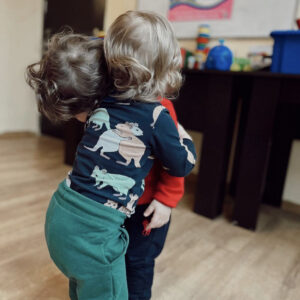
Before the age of one, two babies placed next to each other will generally play alongside each other rather than with each other. This is normal. True cooperative play develops gradually through the toddler years, and sharing is genuinely hard until around age three. Children are not being difficult. They are being developmentally appropriate.
What you can do
You do not need to arrange elaborate playdates or enrol in everything. The most powerful social learning happens in ordinary moments.
Make eye contact and wait. Copy a sound your baby makes and see what comes back. Introduce new people gradually and let your baby set the pace. Give them opportunities to be around other children, even if they mostly observe to begin with.
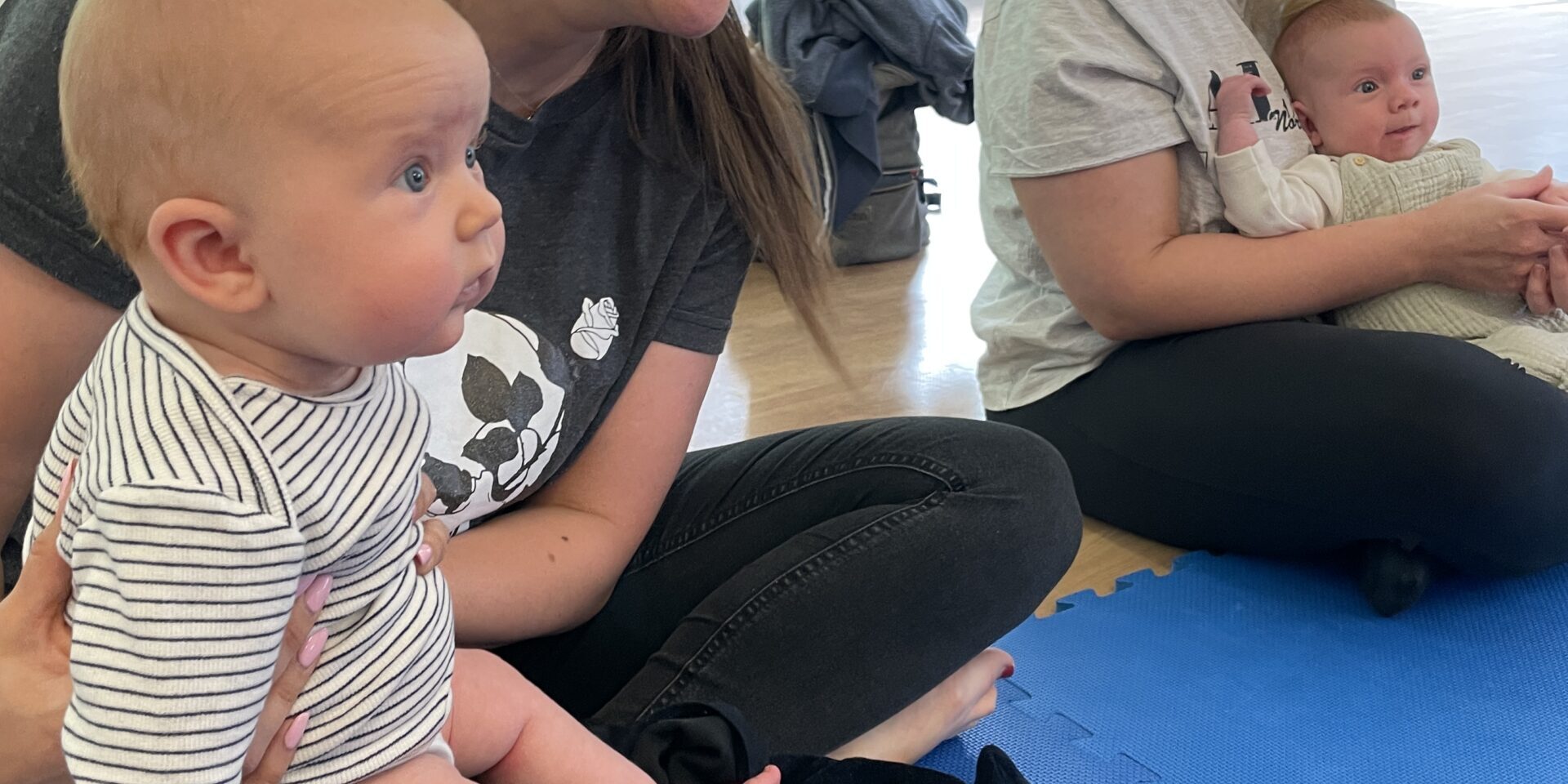
At Baby College, every class is structured around exactly this kind of interaction – between parent and child, between children, and between families. The social environment is part of the programme, not just a backdrop.
Find your nearest class at babycollege.co.uk/find-a-class
#babycollegefamily