How Your Baby Learns to Talk Before They Say a Single Word
Introduction
Long before your baby says their first word, their brain is already doing extraordinary work. Every time you chat to them during a nappy change, sing a song at bedtime, or simply narrate what you are doing around the house, you are laying the foundations for language. It is one of the most remarkable things about early development, and one of the most empowering things a parent can know.
What is happening in your baby’s brain?
In the first year of life, babies are absorbing language at a rate they will never match again. Their brains are forming neural connections at astonishing speed, tuning in to the sounds, rhythms, and patterns of the language around them. By six months, most babies can already distinguish the sounds of their mother tongue from those of other languages. They are listening, processing, and preparing, all long before they can respond with words of their own.
This is why the early months matter so much. The conversations you have with your baby, even when it feels like you are talking to yourself, are building the architecture of their future communication.
Serve and return: the back and forth that builds language
One of the most powerful things you can do for your baby’s language development is something that comes naturally to most parents: responding to them. When your baby coos, babbles, or makes eye contact, and you respond with a smile, a word, or an expression, you are engaging in what developmental scientists call serve and return. This back and forth interaction is foundational for language, social development, and even emotional regulation.
You do not need flashcards or apps. You need presence.
Talking, singing, and reading
Research consistently shows that babies who are talked to frequently develop larger vocabularies and stronger language skills. This does not mean a running commentary has to feel forced. It can be as simple as describing what you see on a walk, narrating bath time, or reading the same board book for the twentieth time (babies genuinely love repetition as it reinforces learning).
Singing is particularly powerful. The rhythm and melody of songs help babies pick out individual words and sounds, and the repetition helps cement patterns in the brain.
What to expect and when
Every baby develops at their own pace, but broadly speaking, most babies will coo and make vowel sounds from around two months, begin babbling with consonant sounds from around six months, start to understand simple words like their own name and “no” from around eight to ten months, and say their first words somewhere between ten and fourteen months.
If you have any concerns about your baby’s language development, always speak to your health visitor or GP.
How Baby College supports language development
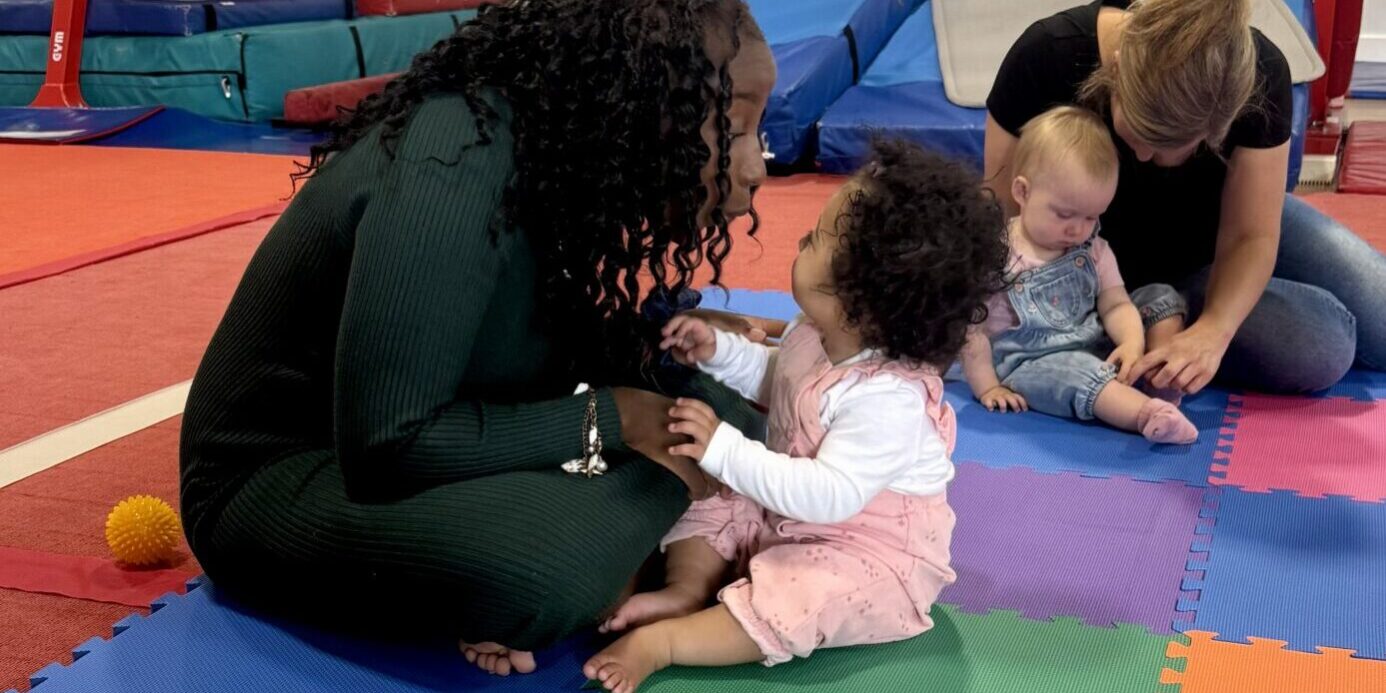
At Baby College, language development is woven through everything we do. Our classes use songs, rhymes, and structured activities to stimulate your baby’s listening and vocalisation. We help you understand the why behind the activities, so you can carry the learning home with you and make every day a language-rich experience for your baby.
Because the best thing for your baby’s development is you, informed and confident.