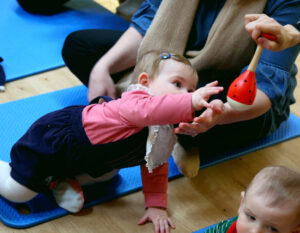
Musical Development Begins Before Birth
Musical development in children starts long before they take their first breath. Remarkably, babies begin to hear and recognise sounds while still in the womb, a process intimately tied to their later musicality. Just like language and creativity, a child’s musical development is influenced by genetics and the environment, including the home atmosphere and interactions with family and friends.
Hearing in the Womb
From about 20 weeks gestation, foetuses can respond to low-frequency sounds, gradually becoming more attuned to higher frequencies. While the womb’s tissues and fluids filter out high-frequency components, babies can still detect rhythms, melodies, and the emotional tones of voices, particularly their mother’s. This early exposure to sound sets the stage for a newborn’s ability to recognise and respond to familiar voices and tunes after birth.
Remembering Voices and Music
After birth, babies can recognise and are calmed by voices and music they heard in utero. For instance, they often respond to “motherese” — the exaggerated speech sounds that adults naturally use when talking to infants. Babies also show a preference for familiar songs and rhythms, demonstrating an early form of musical memory.
The Soap Opera Study
A fascinating study published in The Lancet in 1988 highlights this phenomenon. Researchers found that babies exposed to soap opera theme tunes while in the womb responded positively to these tunes after birth. Mothers in the study watched a particular soap opera regularly during pregnancy. After birth, babies who had been exposed to the show’s theme tune stopped crying and became more attentive when they heard it. This response was significantly stronger in the study group compared to a control group, showing that repeated exposure to a tune during pregnancy can leave a lasting impression on a newborn.
Engaging with Babies Musically
Connecting with newborns through music is crucial for their development. Singing and chanting to a baby, even if you’re not a professional singer, is a powerful way to bond and express emotions. Babies prefer the sound of their caregiver’s voice over recorded music because it helps in developing communication and emotional wellbeing.
Suggestions for Musical Play
To foster musical engagement with your baby, consider these activities:
- Noisy Treasure Basket: Fill a basket with safe household objects like small metallic boxes, bells, and wooden spoons. Babies love exploring these sounds.
- Copying Games: Mimic your baby’s movements or sounds and leave pauses to see how they respond.
- Rocking and Swinging: Support young babies while gently rocking or swinging them to music. This movement, paired with your singing or humming, can be very soothing.
- Restful Moments: Use a large towel or sheet to create a hammock and gently rock your baby while singing lullabies to help them relax before sleep.
Further Reading and Resources
- Tiny Happy People: Offers ideas and free downloadable resources for musical play with young children.
- Music with the Under-Fours by Susan Young: A comprehensive guide on musical activities for young children (ISBN: 9780415287067).
Musical interaction is more than just play—it’s a vital part of a baby’s emotional and cognitive development and one of the few activities that stimulates the entire brain at once. By engaging musically with your baby, you help lay the foundation for their future learning and growth.