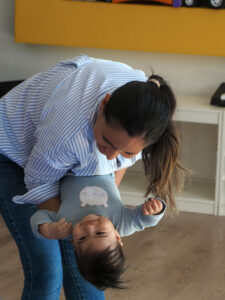
The Power of Early Connection
From the very first cuddle, your baby begins forming the most important relationship of all—the one with you. That first connection with a primary caregiver isn’t just heart-warming, it’s foundational. In fact, your baby’s first friend plays a key role in shaping their brain, behaviour, and ability to form relationships throughout life.
Attachment and the Developing Brain
In those early weeks and months, your baby’s brain is growing at an extraordinary pace—forming up to a million neural connections per second. This period of early development is especially sensitive to social input.
The prefrontal cortex, which is responsible for social judgement, emotion regulation and decision-making, begins to take shape during this time. Interactions with caregivers—like soothing, smiling, talking, and cuddling—fuel the development of this area, as well as the limbic system, which helps manage emotions.
Another key player is the mirror neuron system. This system activates not just when your baby performs an action, but also when they observe you doing it. So, when you smile and your baby smiles back, their brain is learning empathy and imitation—essential for social connection.
Your Baby is Born Social
Even newborns are wired to connect. They seek out faces, respond to voices, and calm when held. By one month, they may try to copy your facial expressions—a wobbly attempt at social engagement. By two months, their first social smile appears, often in response to someone familiar. And by three months, your baby may coo and make eye contact in a kind of “conversation” that builds their understanding of turn-taking and shared attention.
These interactions don’t just feel lovely—they are literally shaping your baby’s brain. Through positive social experiences, the connections that support emotional regulation, communication, and social skills grow stronger and more efficient.
“The quality of a child’s early experiences sets the foundation for future learning, behaviour and health.”
— Harvard Center on the Developing Child
Why Being Your Baby’s First Friend Matters
When your baby feels safe, loved and understood, they begin to learn that the world is a safe place—and that people can be trusted. This secure attachment is linked to better outcomes in everything from school readiness to long-term emotional wellbeing.
Research has shown that children who form secure attachments are more likely to:
-
Be empathetic and cooperative
-
Form healthy friendships
-
Regulate their emotions effectively
-
Cope with stress more easily
These early experiences create what psychologists call an internal working model—a kind of blueprint for how relationships work. That’s why your role as your baby’s first friend is so vital.
Curious about how your baby’s social brain develops? The NHS has more on early attachment and bonding.
What You Can Do
The good news? You’re probably already doing the most important things:
-
Responding to your baby’s cues
-
Smiling and chatting with them throughout the day
-
Enjoying shared routines like bath time and feeding
-
Holding, cuddling, and comforting them
It’s these ordinary moments that build extraordinary foundations.
At Baby College, we support families through every stage of development—from baby’s first friend, to toddler friendships and beyond. Join us to learn more about early social development and enjoy simple, science-backed ways to connect with your little one.