A vast amount of brain development takes place during a relatively short period of time during childhood.
Compared to other animals, which are born with the ability to move and feed independently, humans are born at a much earlier developmental stage. This evolved out of necessity, as if humans were born at a more independent level, the brain and head would be far too large to pass through the birth canal! Thus, during the early years a child must develop rapidly and learn an enormous number of skills that they’ll need to function throughout their lives.
The neuron
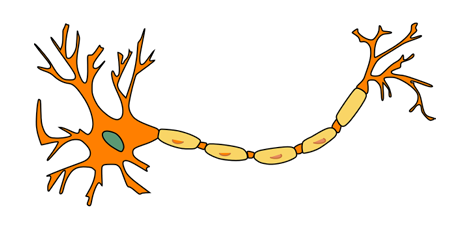
The building blocks of the brain are cells called neurons. On one side of the neuron are many branches known as dendrites (on the left side of the image below).
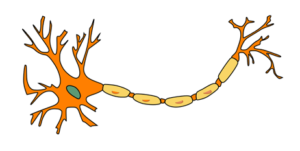
These dendrites pick up signals that pass down the neuron into the cell body. The cell body is the widest part of the neuron and contains all the necessary pieces that work to keep the cell alive and functioning. After the signal passes through the cell body it can pass down through a long slim projection of the nerve known as an axon. The shape of the axon allows the information to spread to the part of the body that will respond to it. At the end of the axon the neuron meets the dendrites of another neuron, and the point they meet is called the synapse. The synapses are the most important part of the cell. It is the many connections of a neuron that matter, rather than the single neuron. There are tens of billions of neurons in the human brain, and multiple neurons must work together to represent even a supposedly simple piece of information.
To illustrate how the nervous system works, let us imagine that a baby experiences a nasty smell. Initially, odour particles are sensed in the nose. Olfactory neurons further up the nasal tract convert this information into an electrical message, which is sent to the brain via the olfactory nerve. In the brain, neurons from this nerve will synapse with other neurons in the parts of the brain that can use the information. These neurons pick up the message on their dendrites and direct it to the cell body. Here the cell body can do many things: it can store the message, share it with other brain cells, or react to the message. In this example, the cell body sends a message, via the axon, to synapse on the nerves and muscles of the face, telling the nose to pull away from the smell and telling the mouth to stay shut. As the sensation has been stored away, the next time the baby smells that smell they move away quicker and with more conviction. Brain development in action!

Thus, this important sensory lesson has been learned and the correct response is strengthened.